Protein anchors
A vegetarian meal can look healthy and still fall short for a lifter if it is mostly vegetables and starch. Start by choosing the protein anchor. Dairy and eggs are convenient for lacto-ovo vegetarians. Greek yogurt, cottage cheese, eggs, and egg whites can make breakfast and snack prep easy.
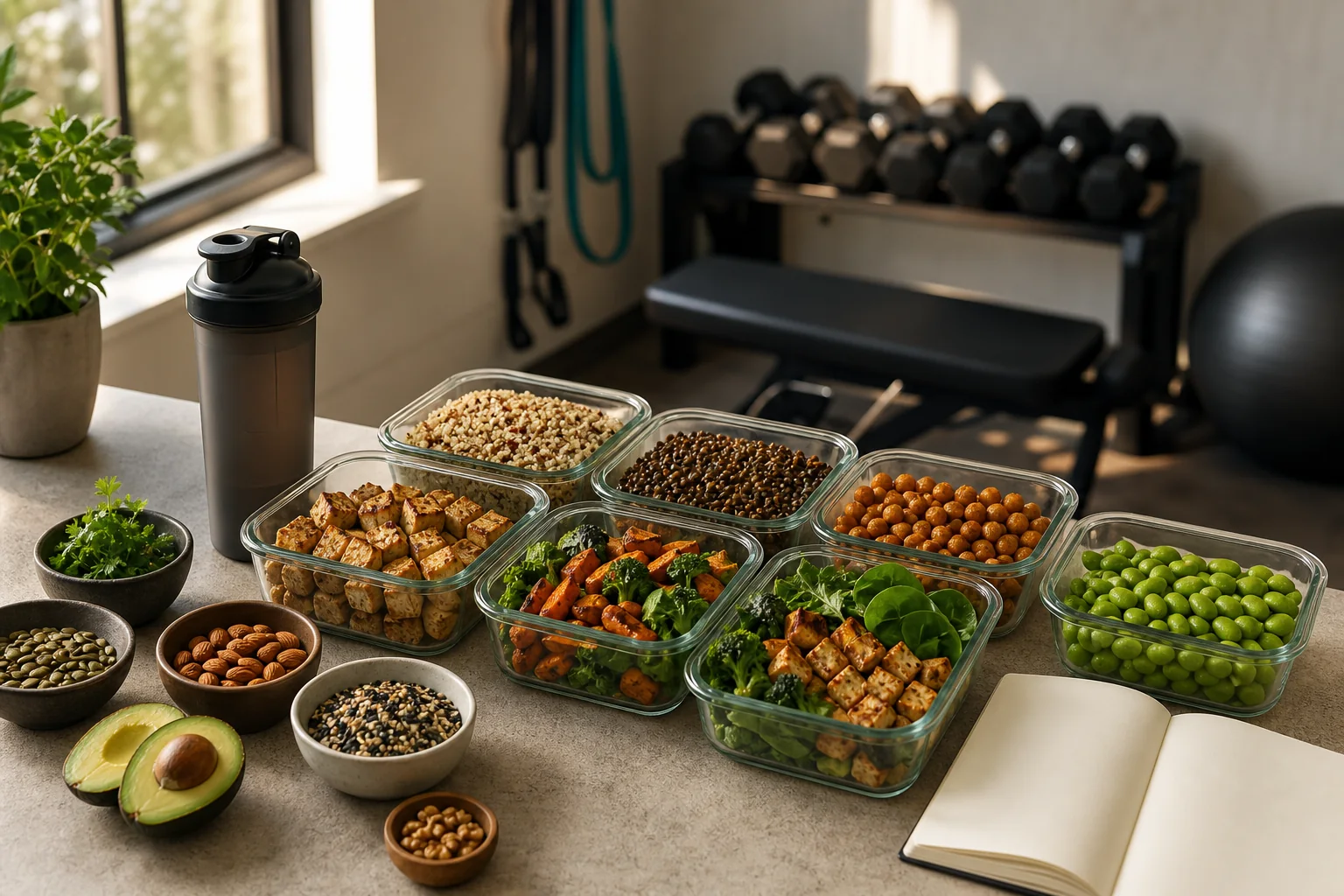
For plant-forward meals, tofu, tempeh, edamame, seitan, lentils, beans, textured vegetable protein, and soy milk are useful staples. Soy foods are especially practical because they provide complete protein and are easy to batch cook. Beans and lentils are excellent foods, but they also bring a lot of fiber, so serving size and digestion matter.
Meal-prep formulas
Use formulas instead of hunting for a new recipe every week. A bowl formula could be tofu or tempeh, rice or potatoes, vegetables, sauce, and a small fat source such as avocado or olive oil. A wrap formula could be eggs or seitan, beans, greens, salsa, and cheese or a dairy-free alternative.
- High-protein breakfast box: Greek yogurt or soy yogurt, oats, berries, nuts, and a side of eggs or tofu scramble if needed.
- Training bowl: tofu, rice, vegetables, teriyaki or peanut sauce, and edamame.
- Lunch wrap: seitan or egg, beans, vegetables, cheese, and a high-fiber wrap.
- Snack box: cottage cheese or hummus, fruit, whole-grain crackers, and roasted edamame.
Flavor keeps the plan alive. Batch the plain ingredients, then rotate sauces: salsa, curry, lemon-tahini, marinara, yogurt sauce, or a simple soy-ginger mix. This avoids the common problem of cooking a large batch once and being tired of it by day two.
Sample prep plan
For a simple week, cook two proteins, two carbohydrates, and two vegetables. Example: baked tofu and boiled eggs; rice and potatoes; roasted broccoli and peppers. From there, build bowls, wraps, and breakfast boxes without starting over each day.
If muscle gain is the goal, do not make every meal low calorie by accident. Add enough carbohydrates and fats to support training and body-weight progress. If fat loss is the goal, keep protein high, use filling vegetables, and control calorie-dense add-ins such as oils, nuts, and cheese rather than removing them blindly.
Portion and storage guardrails
Meal prep should make the next good choice easier, not lock you into food that no longer fits the week. Store wet sauces separately when texture matters, cool cooked food soon after cooking, and use normal food-safety practices for leftovers. If appetite is low, smaller meals with a protein-rich snack may work better than huge containers.
Fiber jumps can affect training comfort. If you are adding more beans, lentils, and whole grains, increase servings gradually and note how your stomach feels around heavy sessions. Digestibility is part of adherence.
Mistakes to avoid
The first mistake is assuming all vegetarian meals are high protein. Pasta with vegetables, a salad, or a smoothie can be useful, but each one needs a protein anchor if it is supposed to support lifting. The second mistake is increasing fiber too quickly. More beans and lentils can be great, but sudden large servings may disrupt training comfort.
The third mistake is ignoring total daily structure. A single high-protein dinner cannot fix a day of very low intake. Spread protein across the meals you can repeat, keep snacks useful, and adjust based on training performance, body-weight trends, appetite, and digestion.