Daily protein comes before timing
Plant-based protein timing works best as meal planning, not stopwatch nutrition. Many muscle-focused plans use roughly 1.6–2.2 grams of protein per kilogram of body weight per day, but the right target depends on total calories, body size, training, food preferences, and medical context. A registered dietitian can individualize the number.
Nutrition background: a review of plant-protein quality and physical function, the Academy position paper on vegetarian diets, and the ISSN protein and exercise position stand.
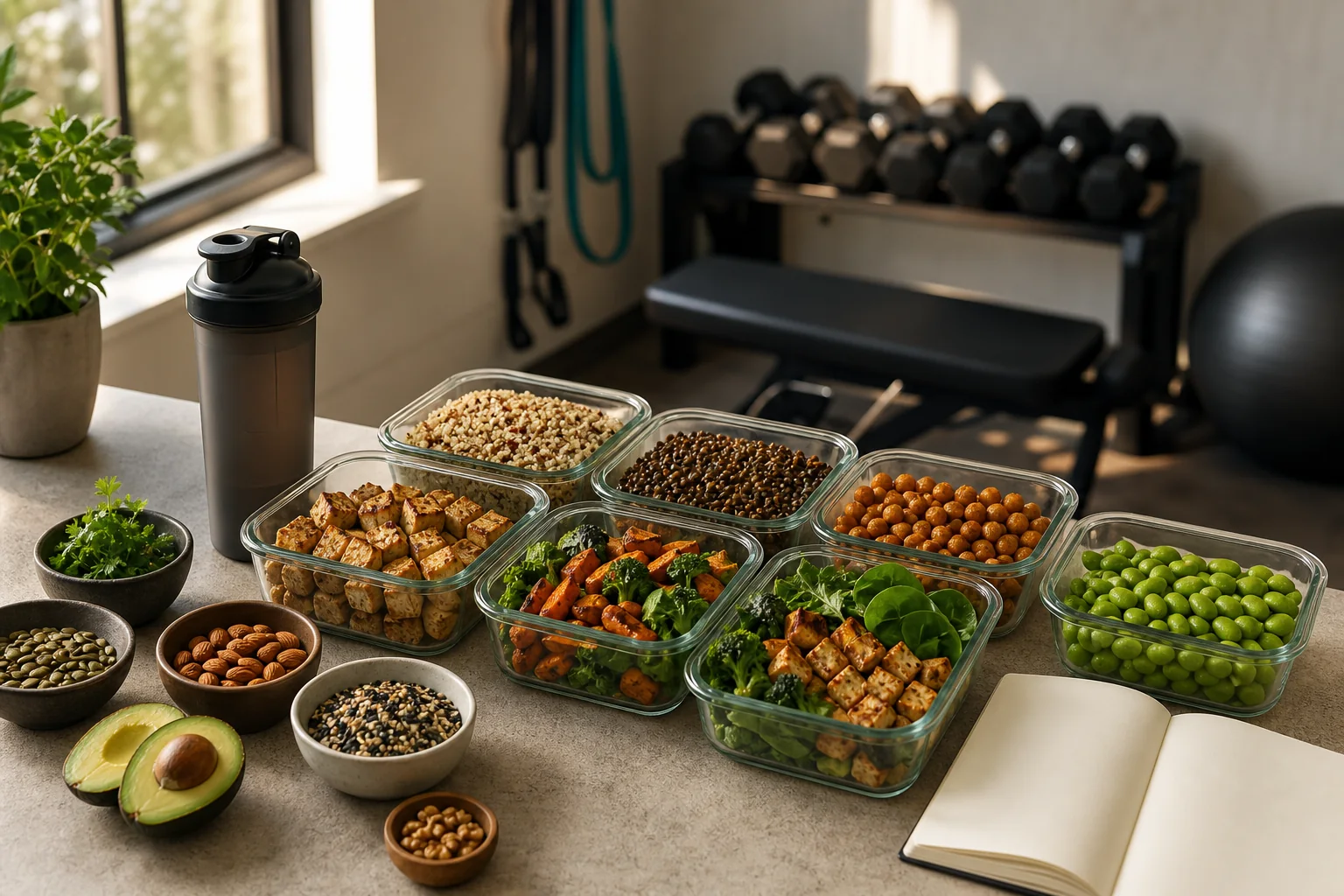
Build three to five protein-anchored meals
Spread the daily total across meals you can repeat. Each meal should have an obvious protein anchor rather than a small amount scattered across bread, vegetables, and snacks. Larger lifters or people eating fewer meals may need larger servings; people with low appetite may do better with more frequent, smaller meals.
- Soy foods: tofu, tempeh, edamame, textured vegetable protein, and soy milk.
- Legumes plus grains: lentils or beans with rice, bread, pasta, or quinoa.
- Wheat protein: seitan for people who tolerate gluten, paired with a varied diet.
- Convenience: a soy, pea, or blended plant-protein powder when food and schedule leave a gap.
Use package labels because protein content varies widely by brand and serving size. Mixing foods across the day is enough; every plate does not need a mathematically perfect amino-acid pairing.
Timing around a workout
If you eat a protein-rich meal two or three hours before training, another normal meal after training is usually practical. If you train early with little food, place a protein-rich breakfast or shake after the session. If you train late, use dinner as the post-workout meal and add a later snack only when it helps the daily target.
The useful window is measured in hours, not minutes. The plan should support appetite, digestion, sleep, and the rest of the day's intake.
Training-day examples
- Morning training: small pre-workout banana if wanted; tofu scramble, toast, and soy milk afterward; lentil bowl at lunch; tempeh stir-fry at dinner.
- Lunch training: oats with soy milk and soy yogurt at breakfast; a bean-and-grain bowl after training; edamame snack; tofu curry at dinner.
- Evening training: tofu or seitan lunch; fruit and soy yogurt before training; lentil pasta or tempeh rice bowl afterward.
Protein quality without overcomplication
Plant proteins differ in digestibility and amino-acid profile. Variety, adequate total intake, and useful serving sizes reduce the need to micromanage one amino acid. Soy foods are especially convenient because they provide a complete amino-acid profile; blends can help when one powder is less balanced or poorly tolerated.
Common mistakes
- Obsessing over a narrow post-workout window while missing the daily total.
- Assuming every plant-based meal is high protein.
- Increasing beans, lentils, and fiber too quickly for comfortable training.
- Relying on powders while meals lack calories, fruit, vegetables, and varied foods.
- Using a rigid target that worsens anxiety or disordered-eating behavior.
Medical and nutrition boundaries
Kidney disease, pregnancy, food allergies, digestive disorders, medication interactions, eating-disorder history, or a major diet change deserve qualified medical or dietitian guidance. If a high-protein plan causes persistent digestive symptoms or displaces other needed foods, adjust the food choices rather than forcing the number.