Start with total daily protein
Meal distribution cannot rescue a day that is consistently short on total protein. For healthy adults doing resistance training, about 1.6 g/kg/day is a useful evidence-based example. A large meta-analysis of protein supplementation and resistance training estimated a breakpoint near 1.62 g/kg/day; its upper confidence boundary was about 2.2 g/kg/day. That upper boundary is not a universal target or proof that more is always better.
Needs vary with age, total calories, training, appetite, food preferences, health, and medical context. Readers with kidney disease, pregnancy, digestive disorders, eating-disorder history, major weight change, or medication concerns should use individualized guidance from a qualified clinician or registered dietitian.
Worked examples by body weight
The examples below use 1.6 g/kg/day only to show the math. They are not personal prescriptions.
- 60 kg: 96 g/day—about 32 g across three meals, 24 g across four, or roughly 19 g across five.
- 75 kg: 120 g/day—about 40 g across three meals, 30 g across four, or 24 g across five.
- 90 kg: 144 g/day—about 48 g across three meals, 36 g across four, or roughly 29 g across five.
Check nutrition labels and serving sizes because food protein varies. A “high-protein meal” is not a fixed recipe: 30 g may come from a serving of lean meat or fish, a larger portion of tofu or tempeh, dairy plus grains, or a combination of legumes, grains, and soy foods.
What distribution evidence can and cannot show
The evidence is stronger for reaching an adequate daily amount than for one exact meal pattern. The ISSN position stand discusses spreading useful protein servings through the day. A small acute crossover study in eight healthy adults found higher 24-hour muscle-protein synthesis with a more even pattern than with a dinner-heavy pattern, but that short experiment did not measure long-term hypertrophy. See the acute meal-distribution study.
A later systematic review found the evidence insufficient to declare one distribution pattern superior for strength or protein-turnover outcomes. The practical conclusion is modest: use a pattern that helps you reach the daily amount, supports training, and fits appetite and digestion. Do not promise extra muscle from perfectly equal meals.
Build three to five repeatable meals
- Choose the daily example. Use an amount appropriate to your goal and health context rather than copying another lifter.
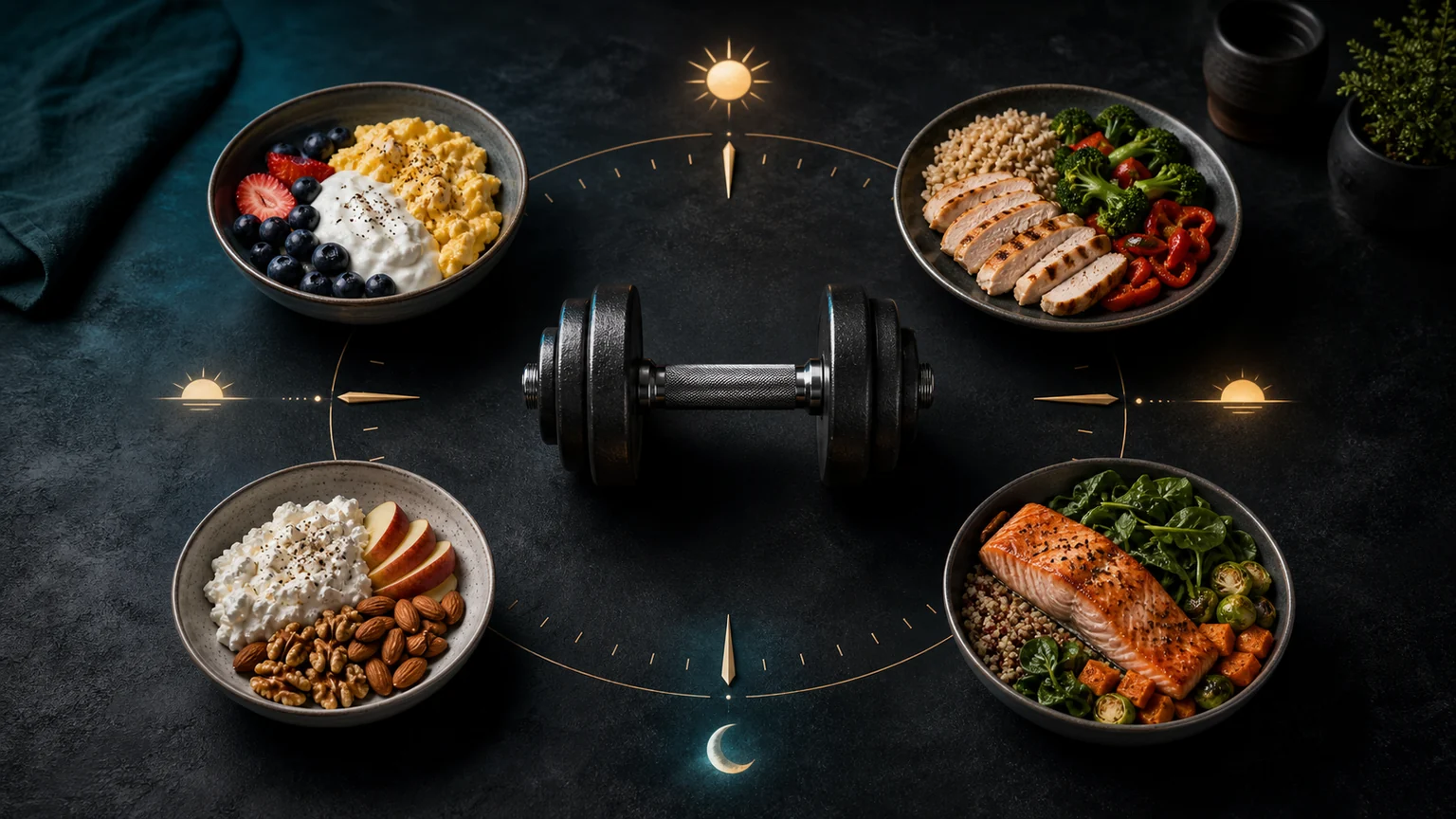
- Choose the number of meals you can sustain. Three larger meals, four moderate meals, or five smaller meals can all work.
- Add a clear protein anchor. Use food you tolerate and can afford; a powder is optional convenience.
- Place a meal near training when useful. A meal within a few hours before or after training can be convenient, but there is no need to chase a minute-by-minute window.
- Check the whole diet. Protein should not crowd out carbohydrates, fats, fruit, vegetables, or total energy needed for health and training.
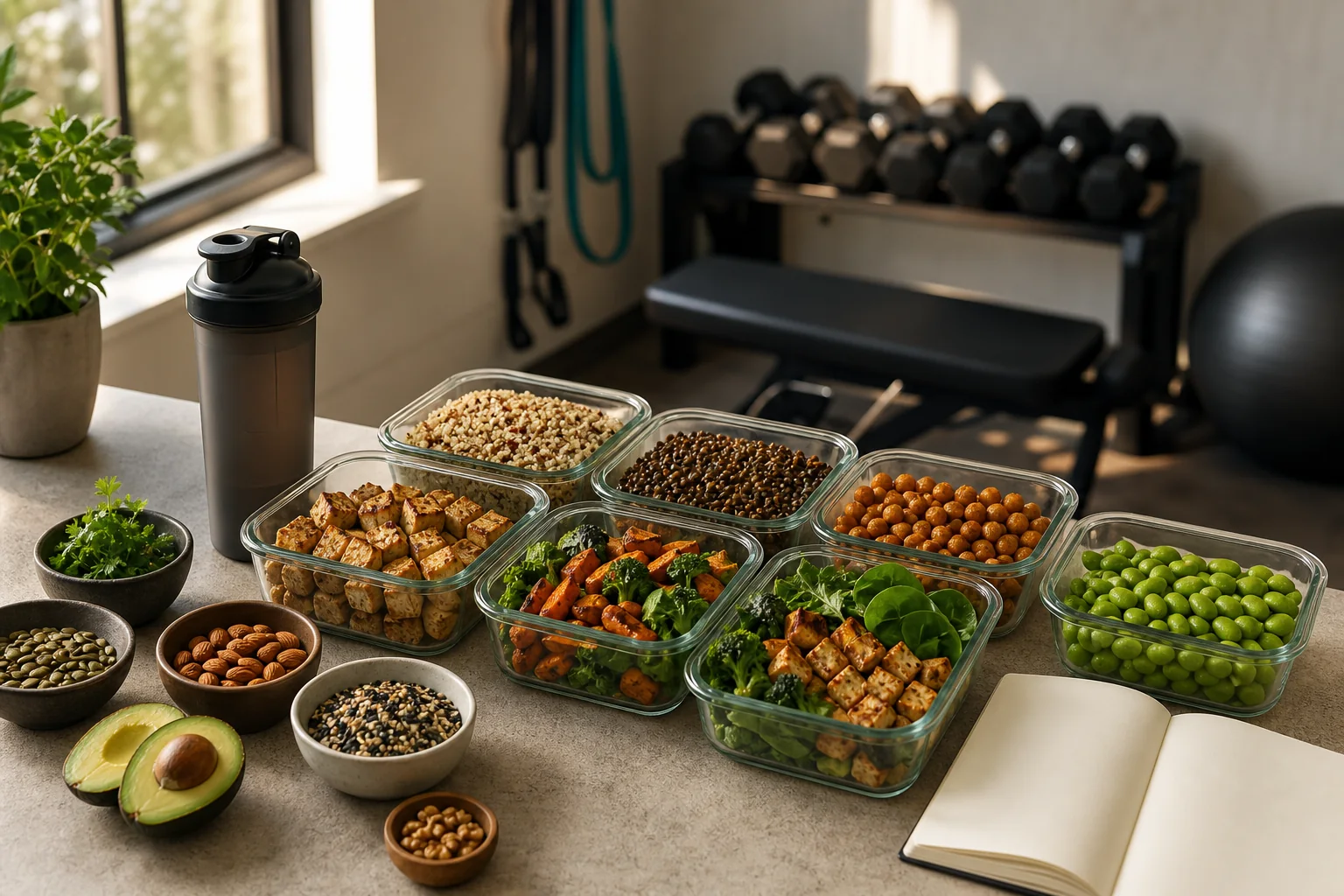
Plant-based readers can use the plant-protein guide for quality, variety, digestion, and meal examples. Lifters dieting can pair this page with muscle-retention planning. A protein shake is most useful when convenience is the real barrier.
Common mistakes
- Saving nearly all protein for dinner because the daily total looks adequate on paper.
- Chasing an upper research boundary as if it were a minimum requirement.
- Counting a food by reputation instead of its actual portion and label.
- Adding several shakes while crowding out meals, fiber, or energy for training.
- Treating acute muscle-protein-synthesis findings as guaranteed long-term hypertrophy.
If a higher-protein pattern causes persistent digestive symptoms, worsens a restrictive relationship with food, or conflicts with medical guidance, change the plan and seek qualified help. Distribution is a planning tool, not a medical treatment.