Start with a decision hierarchy
A useful supplement fills one specific gap after the larger plan is in place: progressive resistance training, enough calories for the goal, enough daily protein, and adequate sleep. If those pieces are inconsistent, adding products usually adds cost, side-effect risk, and confusion without solving the main problem.
Individual response varies with training status, diet, sleep, genetics, medications, and the demands of the sport. Evidence from a study also cannot guarantee the contents or purity of a particular bottle. Treat a supplement as an optional tool with one defined purpose, not as proof that the whole plan is working.
Supplement background: the NIH Office of Dietary Supplements exercise-performance factsheet, the MedlinePlus dietary supplement safety overview, and NCCIH guidance on using supplements wisely.
Creatine monohydrate
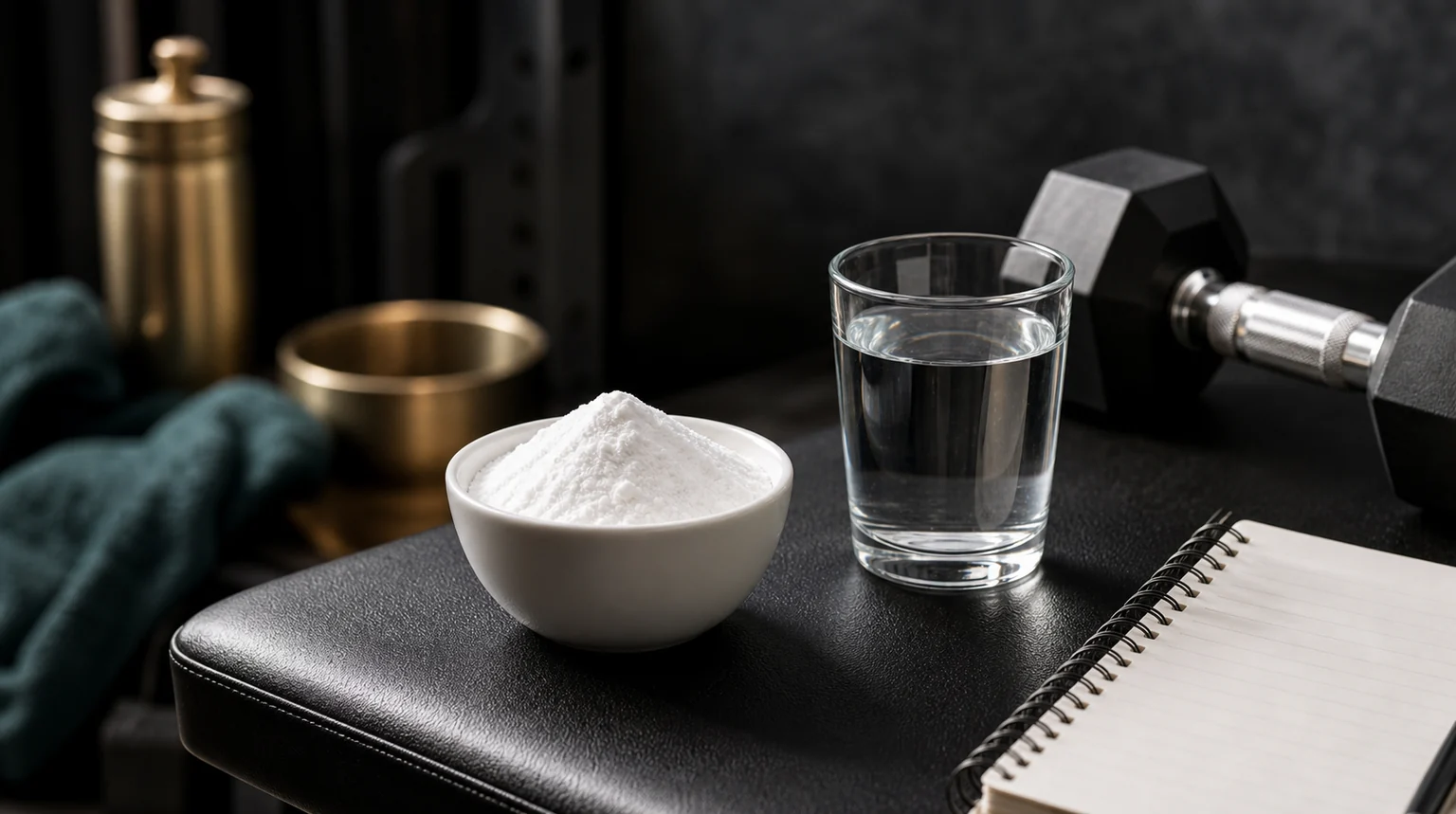
Creatine monohydrate is one of the better-supported options for repeated high-intensity exercise and strength-training performance in many healthy adults. It is still optional and does not guarantee muscle gain. Some users notice water-weight change or stomach upset, while others notice little difference.
People with kidney or liver disease, pregnancy or breastfeeding, medication concerns, dehydration risk, or other medical uncertainty should ask a qualified clinician before using it. Athletes covered by anti-doping rules also need to consider contamination risk before buying any supplement.
Protein powder
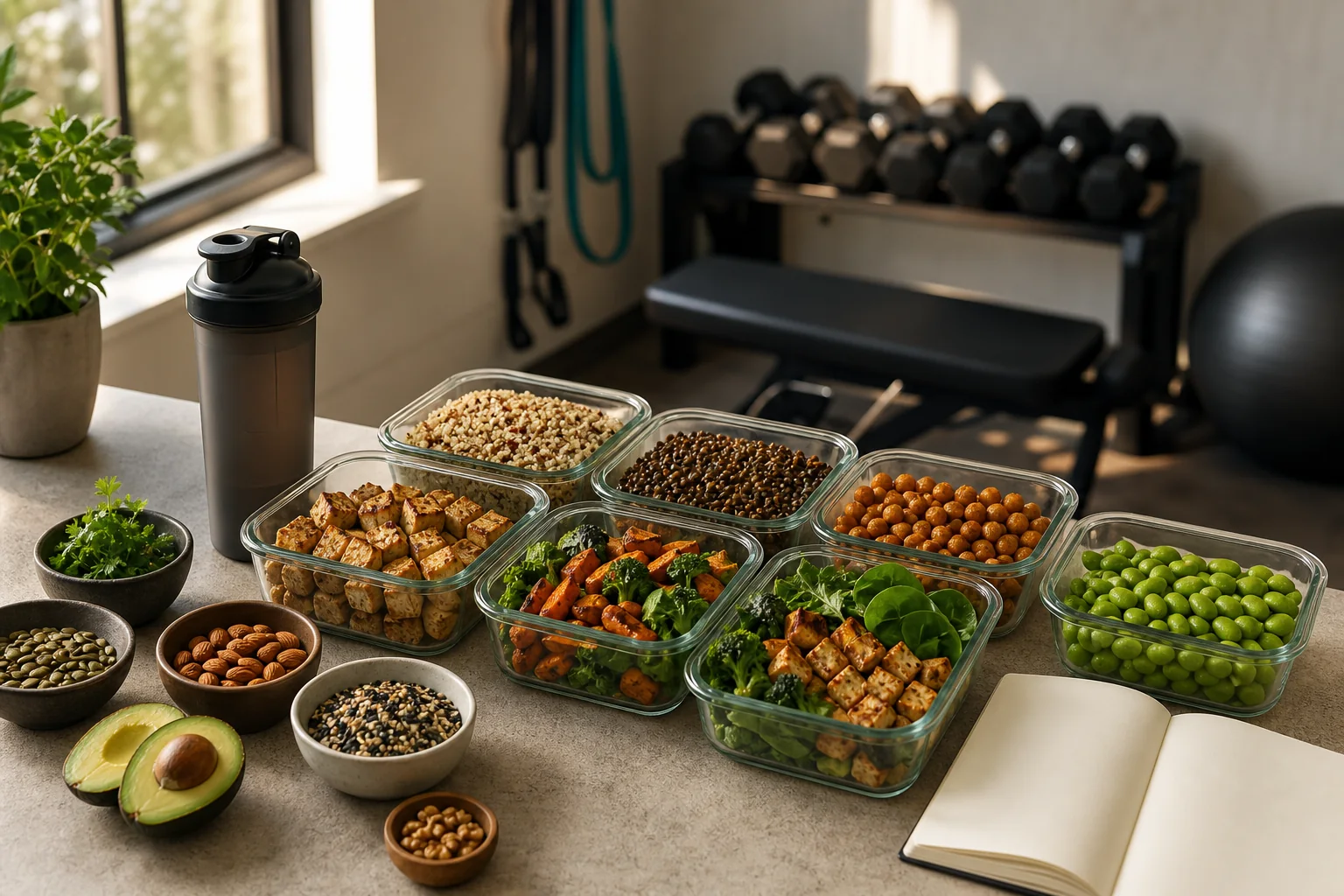
Protein powder is food convenience, not magic. It helps when normal meals leave you short on daily protein or when training makes meal timing difficult. Whey, casein, soy, or pea-rice blends can all fit depending on tolerance, allergies, budget, and preferences. If you already hit your target with food, powder may not add anything important.
People with kidney disease, digestive disorders, food allergies, eating-disorder history, pregnancy, or major medical nutrition concerns should personalize protein choices with a qualified clinician or registered dietitian. For food-first planning, start with protein distribution or plant-based protein timing before adding another product.
Worked example: suppose a lifter and dietitian have set a daily protein target of 140 grams. A seven-day food record already averages 135–145 grams from meals. Protein powder is optional convenience in that case, not a missing muscle-building ingredient. If early-shift days repeatedly fall short, a simple powder or food-based shake may fill that specific gap.
Caffeine, pre-workouts, and beta-alanine
Caffeine and beta-alanine are common in pre-workouts, but the use case is narrower than the marketing suggests. Caffeine can affect alertness and perceived effort, but it can also worsen sleep, anxiety, heart-rate symptoms, blood pressure concerns, or medication interactions. Beta-alanine has mixed performance findings and commonly causes tingling or itching sensations in some users.
A pre-workout label can combine caffeine with other stimulants, flavoring, and proprietary blends, making it harder to know what caused a reaction. Avoid using stimulant products to cover up poor sleep or excessive fatigue, and do not combine multiple stimulant sources just because each one looks normal by itself.
July 2026 safety update: a logo is not enough
On June 4, 2026, the FDA issued a warning letter to a dietary-supplement manufacturer describing significant current-good-manufacturing-practice problems involving hygiene, sanitation, equipment, specifications, complaints, and labeling. The FDA page was current as of July 14, 2026.
This was a warning letter, not a consumer recall. The public letter redacts product identities, so it does not support claims about a named product or every item connected with the firm. The practical lesson is narrower: a polished label cannot show whether a facility met manufacturing requirements.
USADA guidance modified on July 14, 2026 says certification logos can be misused and advises athletes to match the exact product and lot or batch to the certifier's official database. A second USADA supplement-risk advisory, also modified on July 14, says sport certification can reduce but cannot eliminate anti-doping risk.
A safer buying checklist
- Define one job: decide whether the product is meant to fill a protein gap, support a specific performance need, or solve a convenience problem.
- Read the full label: check the serving size, ingredient amounts, stimulant total, allergens, warnings, and any proprietary blend.
- Check people-specific risks: review medications, pregnancy, medical conditions, age, eating-disorder history, and sport rules with an appropriate clinician or other qualified professional.
- Match the exact lot: find the code on the bottle and confirm that product and lot in the certifier's official database; do not rely on the logo alone.
- Check current alerts: search the FDA recalls and safety-alert list for the exact product before using it.
Lot-check example: a bottle displays a sport-certification logo and lot L2407A, but the certifier database lists only lot L2406B. Those are different lots. Do not treat the bottle as confirmed by that database entry; contact the certifier or choose another product.
Products to avoid or treat very cautiously
- Testosterone boosters, hormone boosters, prohormones, SARMs, peptides, steroid-like products, and any product promising drug-like muscle gain.
- Fat burners or cutting products tied to dramatic transformation claims, dehydration, appetite suppression, or stimulant stacking.
- Proprietary blends that hide exact ingredient amounts or make it hard to compare stimulant exposure.
- Products marketed with drug-test-cleanout, detox, or evasion language.
- Products that conflict with tested-sport rules or have contamination risk.
Common mistakes
Common mistakes include buying several products at once, assuming a logo applies to every lot, copying another lifter's choice without checking medications or medical history, and using stimulants to cover poor sleep. Another mistake is treating supplements as a stack, cycle, sourcing, or evasion problem. This guide does not provide those instructions.
Stop using the product and seek qualified care for chest pain, fainting, unusual heart rhythm, severe headache, shortness of breath, severe swelling, numbness, yellowing of the skin or eyes, dark urine, or another severe or rapidly worsening reaction. Do not train through those symptoms.