A repeatable two-day starting plan
Two full-body sessions are enough to establish a useful baseline for many returning or time-limited lifters. The goal is not to fit every exercise into one workout. It is to repeat the main patterns often enough to improve technique and make the next progression obvious.
Day A: a squat or leg-press pattern, a horizontal press, a supported row, a hip hinge, and one optional arm or calf exercise. Day B: a split squat or step-up, a vertical or incline press, a pulldown, a hamstring curl or lighter hinge, and one optional carry or trunk exercise.
Begin with two working sets per exercise after warm-ups. Use a rep range such as 6–10 for stable compound movements and 8–15 for accessories, but treat those ranges as examples rather than medical or individualized prescriptions. Finish most sets with about two or three clean repetitions still available. Add a third weekly session only when the first two are repeatable and recovery is not trending down.
Choose exercises by fit and purpose
A barbell is not a requirement for hypertrophy. Machines, cables, dumbbells, and supported variations can make setup easier and reduce balance demands while still allowing progressive loading. Choose the version that trains the target muscle through a controlled range without repeatedly aggravating a joint.
- Knee-dominant: leg press, goblet squat, box squat, hack squat, or split squat.
- Hip-dominant: Romanian deadlift, hip thrust, back extension, or hamstring curl.
- Press: machine press, dumbbell press, push-up, or barbell press when the setup is comfortable.
- Pull: chest-supported row, cable row, pulldown, or assisted pull-up.
Keep useful movements for several weeks. Constant exercise rotation makes it difficult to know whether strength, technique, or tolerance is improving. Change a movement when the setup is unsafe, pain repeatedly increases, equipment is unavailable, or the exercise no longer trains the intended area well.
Warm up for the work in front of you
Use a short general warm-up if it helps you feel ready, then perform specific ramp sets for the first demanding lift. A lifter planning a 100 lb working set might use the empty implement, then 50 lb, then 75 lb for fewer reps before beginning. The exact jumps depend on the lift and the person.
Warm-ups should improve readiness without creating fatigue. More age does not automatically require a long collection of corrective drills. A colder morning, a technical exercise, or a stiff joint may need more preparation; a familiar machine accessory may need much less. Stop a warm-up that causes sharp pain, dizziness, loss of balance, or an unusual symptom.
Progress with reps before load
Use double progression. Pick a rep range, keep the exercise and setup stable, and add reps while the sets remain controlled. When every working set reaches the top of the range with the intended repetitions in reserve, add the smallest practical amount of weight and return to the lower end of the range.
For example, a chest-supported row programmed for two sets of 8–12 might progress from 10 and 9 reps, to 11 and 10, to 12 and 12 across several sessions. Only then does the load increase. If the new weight produces twisting, shortened range, or a large jump in effort, reduce it and build more repetitions first.
Do not add load, sets, frequency, and failure work in the same week. One change produces readable feedback. Several changes produce soreness and uncertainty about what caused it. Record the actual load, reps, RPE, and symptoms so the next session follows evidence from your own training.
Manage recovery with trends, not stereotypes
Recovery is individual. Look for a pattern across two or more sessions: falling repetitions at the same load, unusually high RPE, persistent joint irritation, disrupted sleep, or soreness that changes technique. One mediocre workout is not a reason to replace the whole program.
When several signals decline together, remove one accessory set, keep more repetitions in reserve, or use a lighter week before adding work again. When performance is stable and soreness resolves normally, there is no need to reduce training merely because of a birthday.
Nutrition supports the plan
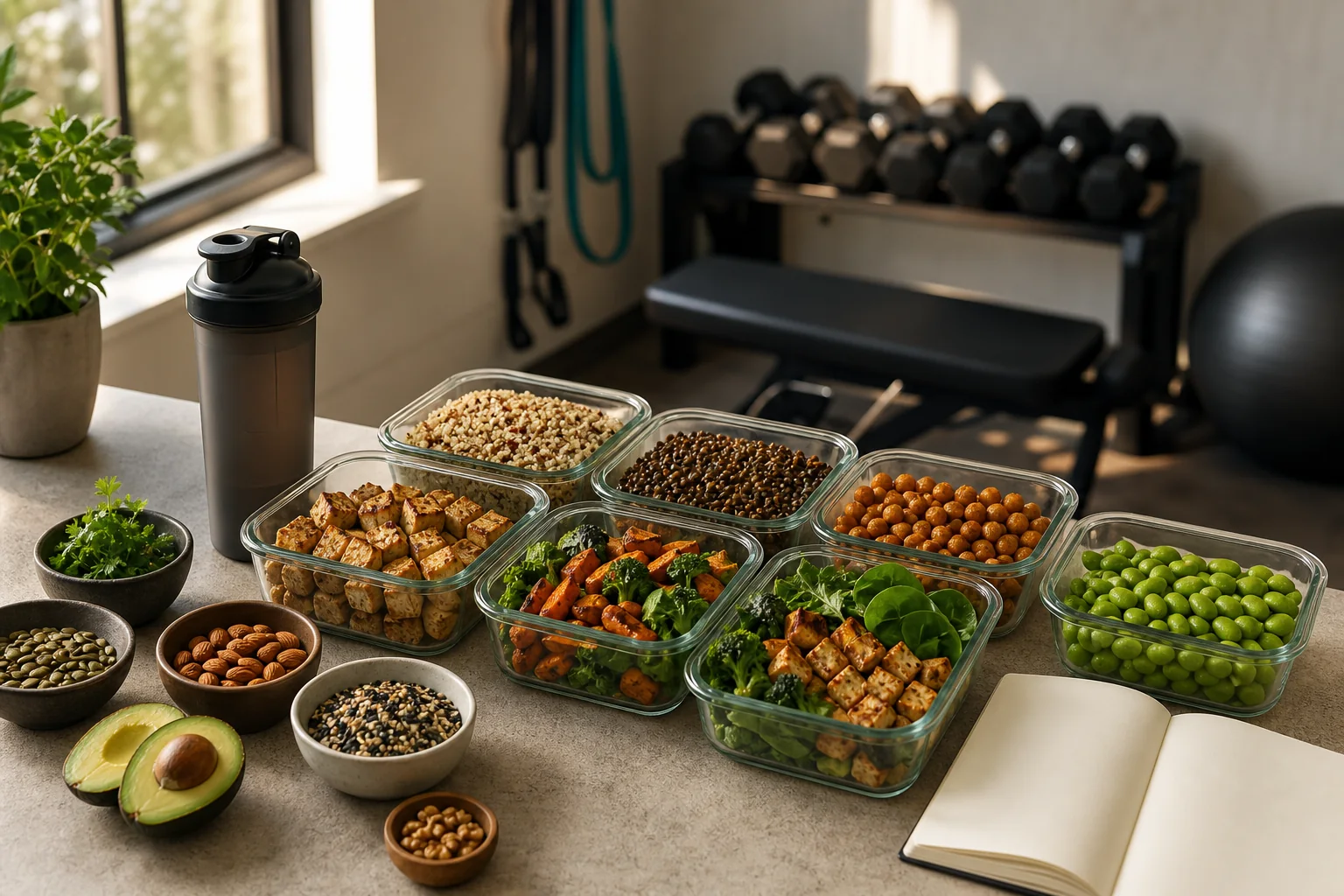
Muscle gain requires enough food and protein to support training. Start with regular meals that contain a clear protein source, carbohydrates that support the session, and foods you tolerate. Spread protein across the day rather than relying on one large evening meal or a product marketed to older adults.
Protein targets depend on body size, total energy intake, kidney function, appetite, medications, and medical context. The ISSN position stand provides general sport-nutrition context, but kidney disease, major weight change, poor appetite, digestive problems, or complex medications deserve a clinician or registered dietitian who can individualize the plan.
Common mistakes
- Starting with the volume used years ago instead of rebuilding from a current baseline.
- Taking every working set to failure when two or three clean repetitions in reserve would allow better practice.
- Changing exercises weekly and losing the ability to measure progress.
- Using joint pain as proof that the body needs more warm-up instead of changing load, range, or exercise selection.
- Adding a supplement before sleep, meals, training consistency, and medication questions are addressed.
- Ignoring balance, blood-pressure, or chest symptoms because the workout used light weights.
When medical context changes the plan
The Physical Activity Guidelines for Americans include muscle-strengthening work, and the NSCA position statement describes resistance training as useful for older adults. Neither source can clear an individual for exercise.
Ask for qualified guidance when uncontrolled blood pressure, heart or lung disease, osteoporosis, balance problems, recent surgery, cancer treatment, neurological symptoms, major medication changes, or a recent injury affect exercise choice. Seek urgent help for chest pain, fainting, sudden one-sided weakness, severe breathing difficulty, or another possible emergency. This guide is educational and cannot diagnose a condition or provide an individual program.