Bruises from working out: normal contact versus red flags
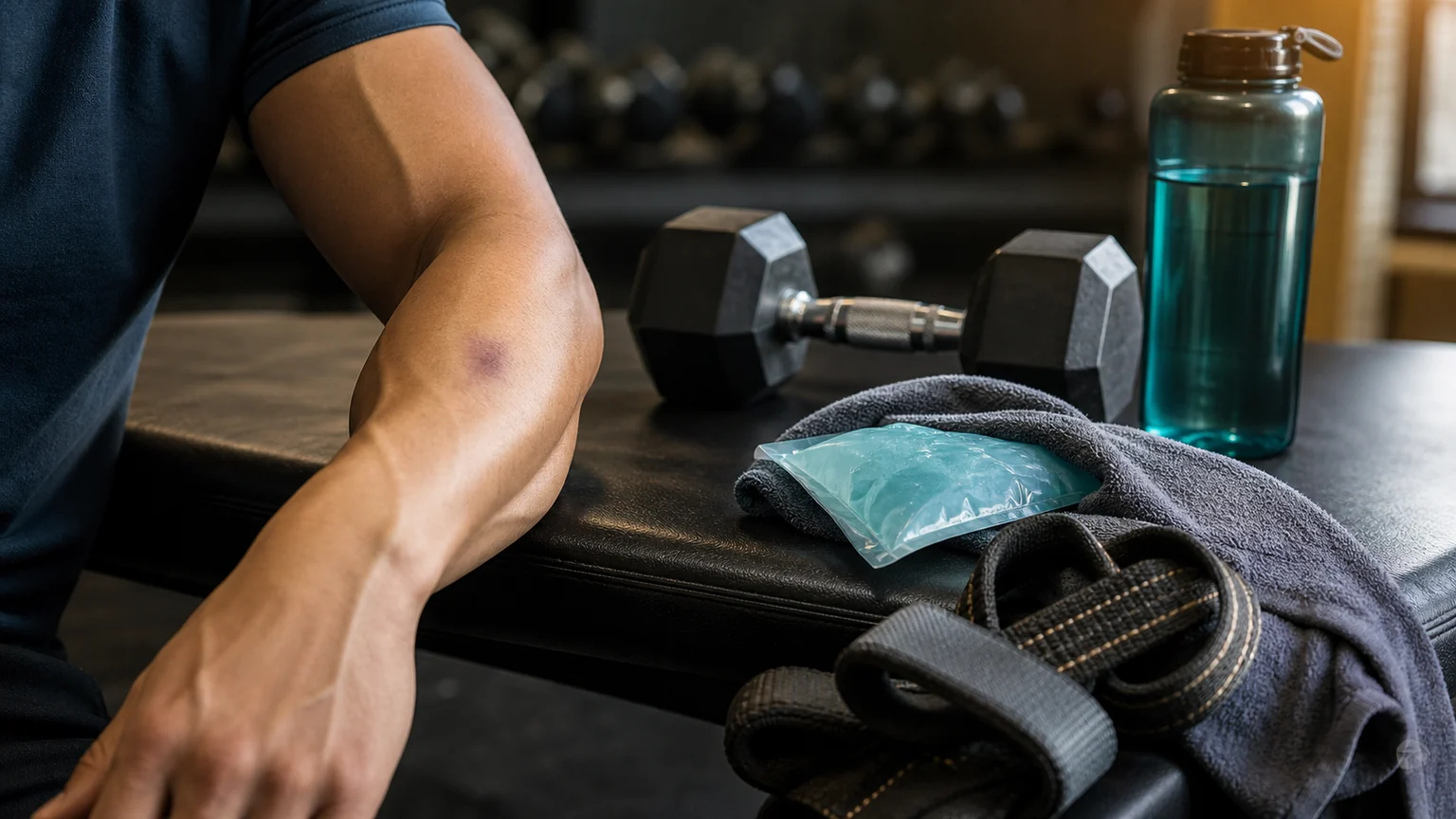
Bruises from working out usually have an obvious story. A bar sits hard on the shoulders, a dumbbell bumps the thigh, a hip-thrust pad compresses the same spot, or a strap pinches the forearm. If the bruise is small, matches the contact point, and improves over several days, the next step is usually to adjust the setup rather than panic.
Unexplained bruising is different. Large bruises, repeated bruises without clear contact, bruising with nosebleeds or gum bleeding, bruising after a fall, severe swelling, weakness, or bruises that spread should be treated as a health question. Medications and medical conditions can also change bruising risk, so do not blame every mark on training.
Health background: MedlinePlus on bruising and Cleveland Clinic on bruises.
Common lifting-related causes
- Front squats, high-bar squats, hip thrusts, belt squats, or machine pads pressing into the same tissue repeatedly.
- Dumbbells or kettlebells clipping the forearm, thigh, or upper arm during rushed setup.
- Grip straps, cuffs, wraps, belts, or sleeves that are too tight or placed poorly.
- Large load jumps that make technique drift and create more collision or pressure.
How to adjust the next session
If the bruise is mild and improving, keep training but remove the repeated contact. Reposition the bar, use a towel or pad only if it improves control, slow down setup, or choose a machine or dumbbell variation for a week. If the mark is painful under direct pressure, train a different pattern while it settles.
Do not use sleeves, wraps, or padding to hide a problem that keeps returning. If the same lift causes the same bruise every week, the cause is usually placement, equipment fit, fatigue, or load selection. Record the exercise, load, and exact body area so you can identify the pattern.
Progression limits
A bruise should fade, not expand. Avoid heavy contact on the area until tenderness is clearly improving. Seek qualified care for severe pain, swelling, weakness, bruising after trauma, or repeated bruises without an obvious training cause.