Impact, load, and effort are different
Impact usually describes a rapid force from landing, striking, or colliding. Load is the resistance your muscles and joints handle. Effort is how close a set comes to your current limit. A seated machine press can be low impact, heavily loaded, and very hard at the same time.
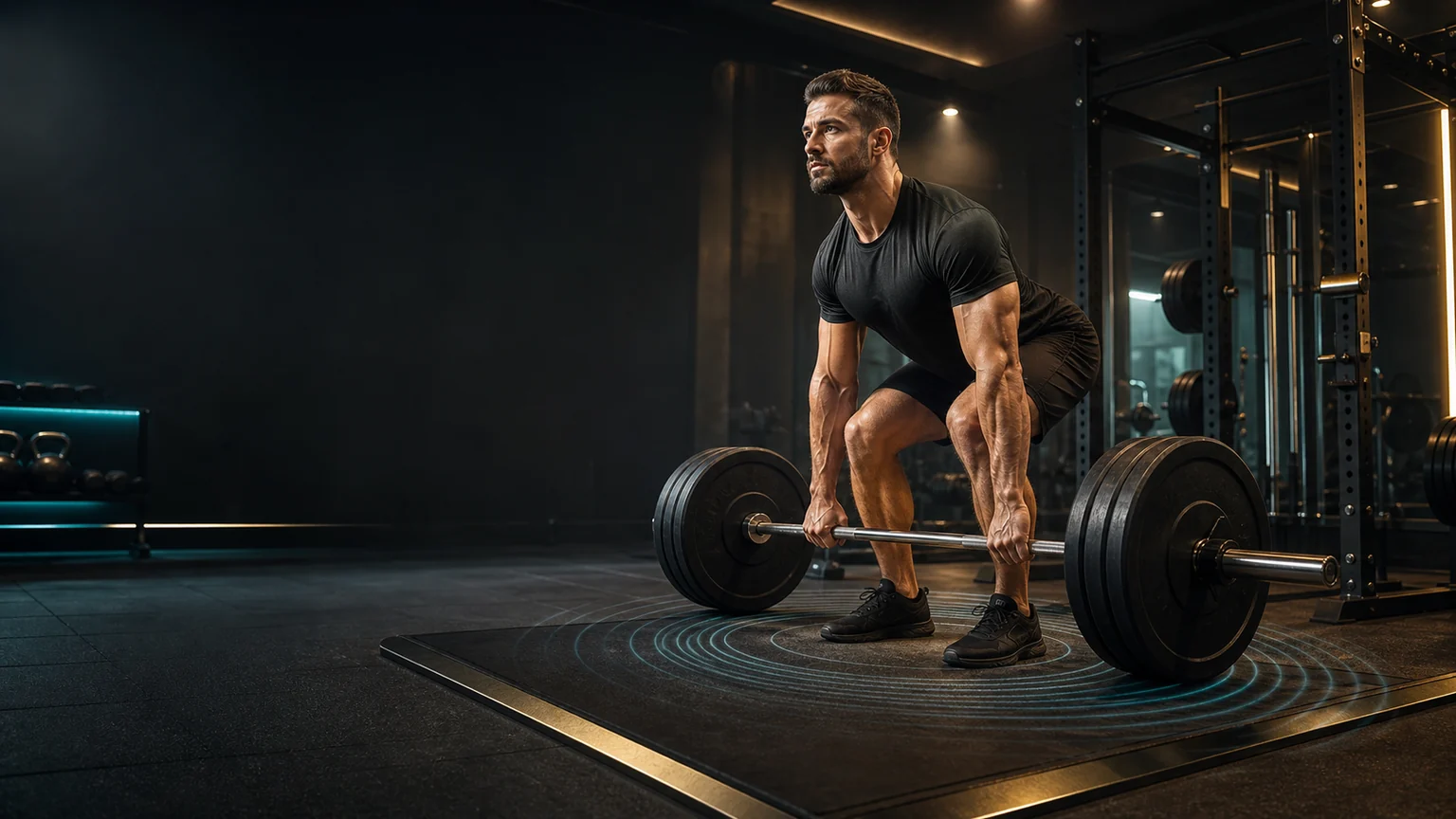
This distinction matters because “low impact” is not a safety rating. A controlled deadlift has no landing phase, but an aggressive load jump can still exceed what the back, hips, grip, or connective tissue is prepared to handle. A light jump squat uses less external weight but adds a landing. Choose the exercise by the goal and your response, not by one label.
- Usually low impact: controlled machine work, cable exercises, supported rows, ordinary squats, presses, deadlifts, and hip thrusts.
- Impact varies: Olympic-lift catches, kettlebell work, fast step-ups, and loaded carries, depending on speed, technique, and setup.
- Usually higher impact: repeated jumps, bounding, sprinting, depth jumps, and exercises that deliberately include a landing.
A five-step low-impact setup for beginners
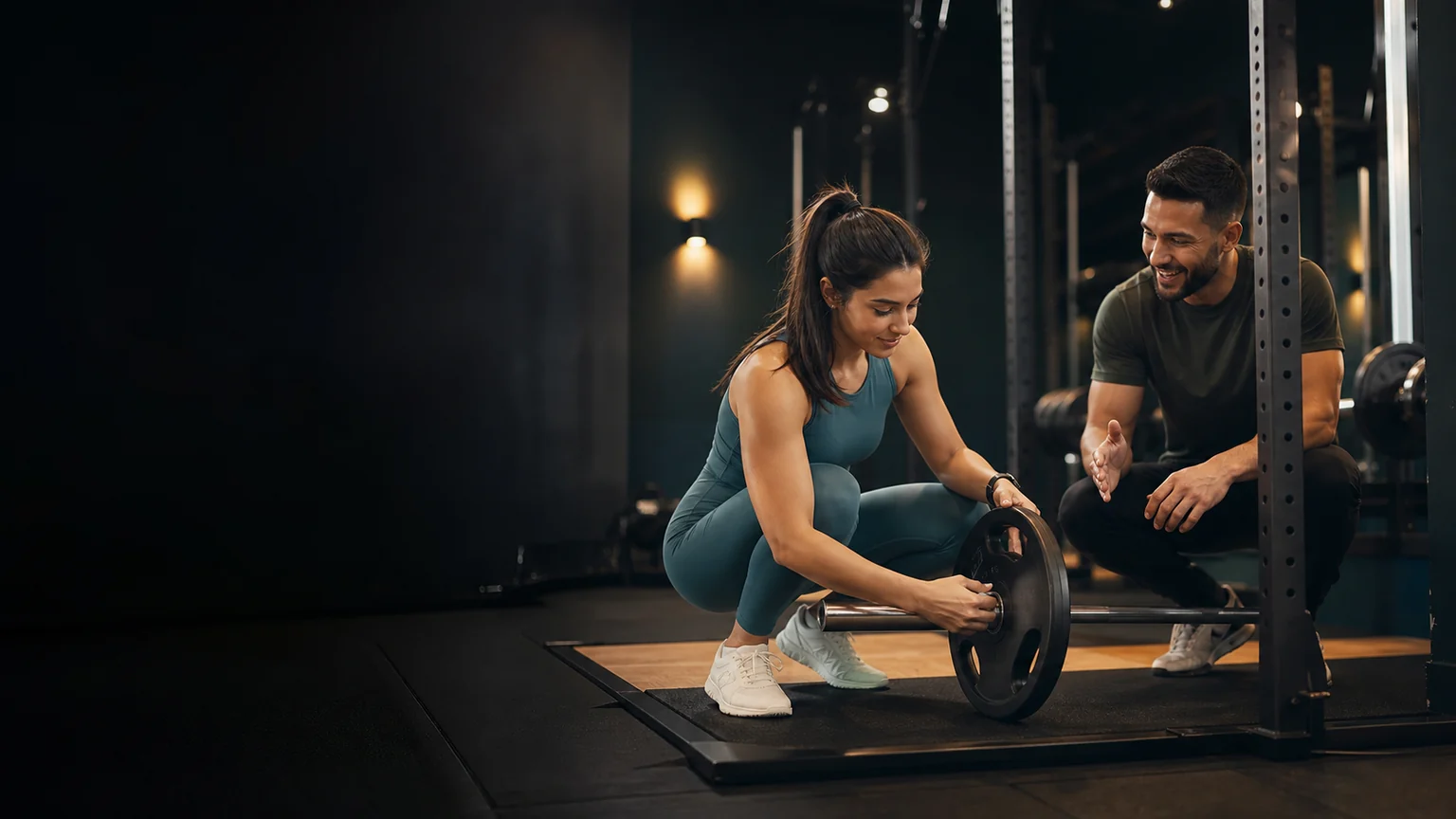
- Choose a stable version. Start with a box squat, goblet squat, leg press, chest-supported row, cable row, machine press, or supported dumbbell press when balance or confidence limits the movement.
- Warm up for the exact lift. Use a few minutes of easy movement, then two to four progressively heavier ramp sets. The 10-minute lifter warm-up gives a simple structure.
- Leave room in the set. Pick a load that leaves about two or three clean reps in reserve. The final planned rep should still use the intended range and control.
- Repeat before adding. Keep the exercise, load, and rep target stable long enough to see how your joints, muscles, and technique respond.
- Progress one variable. Add a rep, a small amount of load, one set, or a little range of motion—not all of them in the same session.
Worked example: a low-impact full-body session
A new lifter could begin with the following session twice per week, using loads that leave two or three clean reps in reserve:
- Goblet squat to a comfortable depth: 3 sets of 8 reps.
- Chest-supported row: 3 sets of 10 reps.
- Machine or neutral-grip dumbbell press: 3 sets of 8 reps.
- Hip thrust or controlled Romanian deadlift: 2 sets of 10 reps.
Suppose the goblet squat starts at 20 lb for 3 sets of 8. Add one rep to each set across later sessions until 3 sets of 10 are repeatable with the same control and no worsening symptom pattern. Then move to 22.5 or 25 lb and return to 3 sets of 8. The exact load is individual; the useful part is the repeatable progression rule.
Low-impact swaps by training goal
- Train the legs without landings: replace jump squats with goblet squats, a leg press, split squats with support, or controlled step-ups.
- Reduce balance demand: replace an unsupported row with a chest-supported row, or use a machine press instead of a standing press.
- Use a freer joint path: try neutral-grip dumbbells or cables when a fixed straight-bar path is uncomfortable. A different grip is an option, not a treatment.
- Condition with less impact: compare cycling, rowing, swimming, or a controlled sled push with running or repeated jumps, provided the chosen movement is comfortable and appropriate for you.
Do not keep an exercise merely because it is called low impact. If a machine's setup, range, or resistance repeatedly worsens symptoms, reduce the dose or choose another movement.
How to decide whether to keep, scale, or stop
- Keep the plan: the warm-up feels normal, technique is stable, and ordinary muscle fatigue settles as expected.
- Scale the plan: discomfort rises from set to set, range shortens, you compensate or twist, or soreness affects normal movement longer than expected. Reduce load, range, sets, or exercise complexity.
- Emergency symptoms: stop exercising and call your local emergency number for chest pain, fainting, severe shortness of breath, confusion, a seizure, a sudden severe headache, or new one-sided weakness.
- Urgent injury assessment: get urgent in-person care for a visible deformity, inability to bear weight or use a limb normally, a sudden pop followed by major swelling, rapidly spreading bruising, new numbness or marked weakness, or severe and rapidly worsening pain. Dark or cola-colored urine after hard exercise—especially with severe muscle pain, swelling, or weakness—also needs urgent medical assessment.
This page cannot diagnose the cause of pain. Persistent symptoms, recent trauma, repeated swelling, or pain that changes daily activity deserve assessment from a qualified clinician rather than repeated exercise experiments.
Common mistakes
- Treating “low impact” as proof that an exercise cannot cause pain or injury.
- Adding load, sets, frequency, and range of motion in the same week.
- Forcing a barbell version when a machine, cable, dumbbell, or supported variation fits the goal better.
- Skipping ramp sets because the workout does not include jumping.
- Using sleeves, braces, or padding to push through a movement that is getting more painful.
- Assuming every ache is a technique problem that another set will solve.
What the evidence can and cannot answer
Public-health guidance includes muscle-strengthening activity as part of a healthy adult week. That supports resistance training as a broad activity category; it does not prescribe a particular exercise or load for a person with symptoms or a medical condition. Injury research in weightlifting and powerlifting also describes groups, sports, and study methods that vary. It cannot turn a population estimate into an individual guarantee.
Sources: CDC recommendations for adult activity, the U.S. Physical Activity Guidelines, and the 2024 updated weightlifting and powerlifting injury review.
Frequently asked questions
Are squats and deadlifts high impact?
Controlled squats and deadlifts are usually low impact because they do not require repeated landings. They can still be highly loaded and demanding. Use a load, range, and variation you can repeat without worsening symptoms.
Is low-impact lifting suitable when your knees hurt?
A low-impact label does not identify the cause of knee pain or the right exercise. A supported squat, leg press, shorter comfortable range, or lighter load may be easier for some lifters, but persistent pain, swelling, instability, locking, or loss of function needs qualified assessment.
Can lifting replace cardio because it is low impact?
Lifting and aerobic exercise solve overlapping but different problems. Public-health guidance recommends both muscle-strengthening and aerobic activity. A lifter who wants less-impact conditioning can consider cycling, rowing, swimming, or another tolerable option alongside strength work.
Continue with the guides to choose a starting load, use RPE and reps in reserve, compare dumbbells with barbells, and manage tendon symptoms conservatively.